
New Delhi, India : National health programs influence hospital funding, patient flow, and compliance. This blog explains how Indian hospitals and administrators work within these programs daily.
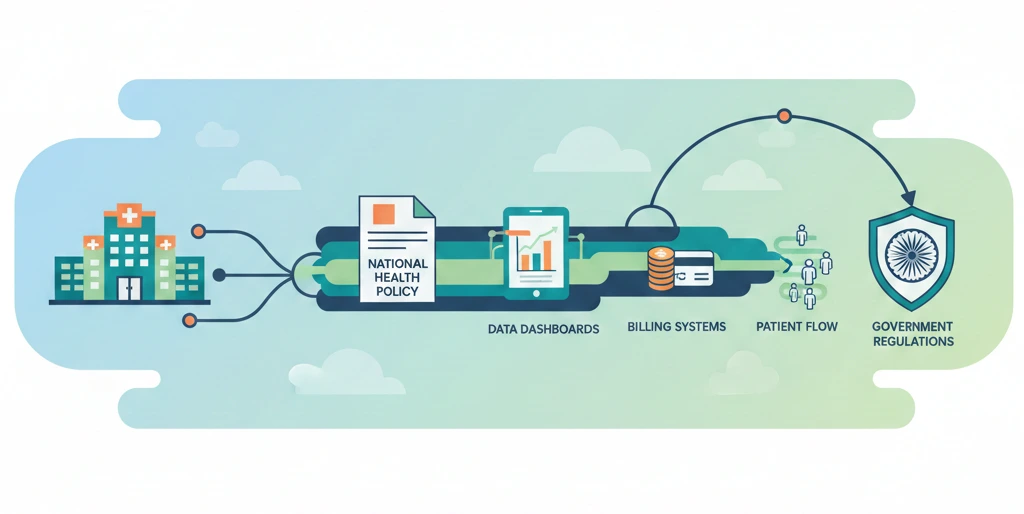
In India, hospitals do not function in isolation. Every public and private hospital operates within a larger national healthcare framework shaped by government policies and health programs. These national health programs influence everything-from patient volume and funding to reporting systems and operational workflows.
For students of Public Health (MPH) and Hospital Administration (MHA), understanding this connection is critical. While public health focuses on population-level impact, hospital administration translates these policies into daily hospital operations. This blog explores how national health programs directly affect hospital administration in India and what future healthcare leaders must understand about this relationship.
The Link Between National Health Programs and Hospitals
National health programs are designed to improve access, affordability, and quality of healthcare at scale. However, their success largely depends on hospitals – the places where policies turn into real services.
When a new program is introduced, hospitals must adapt their systems to meet guidelines, manage additional patient load, ensure documentation, and comply with audits. Administrators play a central role in aligning hospital infrastructure, staff, and finances with national objectives.
Ayushman Bharat and Hospital Operations
Ayushman Bharat-PMJAY is one of the most impactful health programs in India, especially for hospital administrators. Once a hospital is empaneled, it must follow strict protocols related to pricing, treatment packages, documentation, and claim submission.
For hospital administration teams, this means managing cashless patient flow, coordinating with insurance portals, ensuring accurate coding, and reducing claim rejections. Revenue Cycle Management (RCM) becomes tightly linked with government reimbursement timelines. Administrators must balance financial sustainability while delivering standardized care to a high patient volume.
National Health Mission and District Hospitals
The National Health Mission (NHM) plays a crucial role in strengthening district and sub-district hospitals. Programs under NHM influence staffing patterns, equipment procurement, maternal and child health services, and reporting structures.
Hospital administrators working in government or partnered facilities are responsible for coordinating with state health departments, managing contractual staff, and ensuring timely data submission. The success of NHM initiatives often depends on how effectively hospitals manage logistics, human resources, and service delivery on the ground.
Disease Control Programs and Hospital Workflow
Programs targeting tuberculosis, mental health, non-communicable diseases, and infectious diseases significantly shape hospital workflows. These programs require hospitals to maintain disease registries, follow standardized treatment protocols, and report outcomes regularly.
For administrators, this translates into additional responsibilities – setting up dedicated clinics, training staff, managing follow-ups, and ensuring compliance with national guidelines. Hospitals that manage these programs efficiently not only improve patient outcomes but also strengthen their institutional credibility.
Data, Reporting, and Compliance Responsibilities
One of the most underestimated impacts of national health programs is the reporting burden placed on hospitals. Digital portals, dashboards, and real-time data submission are now standard requirements.
Hospital administrators must ensure data accuracy, train staff on digital systems, and prepare for inspections and audits. Poor reporting can lead to funding delays, penalties, or de-empanelment. As a result, data management and health informatics have become essential skills for modern hospital administrators.
Financial Planning and Resource Allocation
National programs often come with fixed reimbursement rates, which directly affect hospital budgeting. Administrators must plan resources carefully – optimizing staff deployment, controlling costs, and preventing revenue leakages.
This financial balancing act is especially challenging for hospitals serving both government scheme patients and private-paying patients. Strategic planning ensures that hospitals remain financially viable while fulfilling public health responsibilities.
What This Means for MPH and MHA Students
For MPH students, national health programs offer insight into how policies impact real healthcare delivery. Fieldwork, evaluations, and research often revolve around these programs.
For MHA students, these programs are operational realities. Understanding empanelment rules, compliance systems, reporting mechanisms, and hospital-government coordination is essential for leadership roles. Employers value administrators who can navigate both public health objectives and hospital efficiency.
The Future of Hospital Administration in Public Programs
As India continues to expand universal health coverage, hospitals will play an even larger role in national health programs. Digital integration, outcome-based funding, and stronger accountability will define the next phase.
Hospital administrators who understand policy, data, finance, and patient care simultaneously will be the backbone of this system. The future belongs to professionals who can bridge the gap between national vision and hospital execution.
Conclusion
National health programs are not just government initiatives – they are everyday realities for hospitals across India. From patient admissions to financial planning and compliance, hospital administration sits at the center of program success.
For aspiring healthcare leaders, understanding this relationship is essential. At Ramyanti Institute of Health Sciences (RIHS), we prepare students to navigate both public health systems and hospital operations – because strong healthcare systems need leaders who understand both worlds.
