
Delhi, India : Public health surveillance enables early detection of health risks and guides timely interventions. This article explains how data-driven surveillance protects population health.
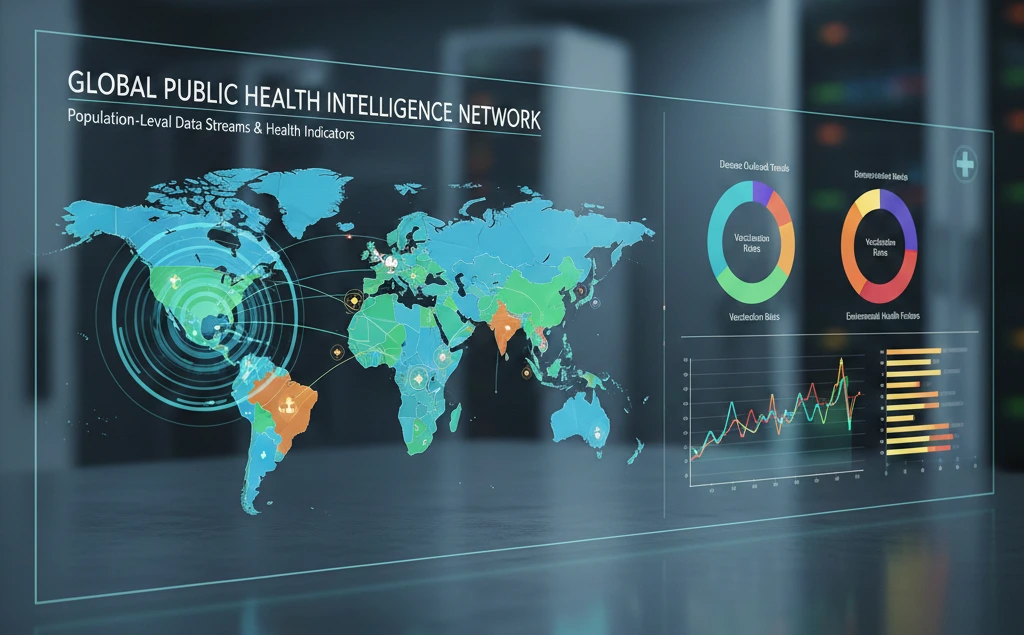
Public health decisions are rarely made in isolation. They rely on timely, accurate, and continuous information about diseases, risks, and health trends within communities. Without such information, health systems react late, resources are misallocated, and preventable harm increases. This is why public health surveillance forms the backbone of modern population health protection.
Surveillance is not limited to tracking diseases after outbreaks occur. It is a proactive system designed to observe health patterns, identify emerging risks, and support evidence-based action before crises escalate.
What Is Public Health Surveillance?
Public health surveillance refers to the ongoing, systematic collection, analysis, interpretation, and dissemination of health-related data. Its purpose is not simply to gather information, but to translate data into action that protects communities.
Surveillance systems monitor communicable diseases, non-communicable conditions, environmental exposures, maternal and child health indicators, injuries, and behavioral risk factors. When designed effectively, these systems provide early warning signals that allow public health authorities to intervene at the right time.
Why Surveillance Matters for Population Health
Population health risks rarely appear suddenly. They develop gradually through changing behaviors, environmental conditions, and social factors. Surveillance helps detect these shifts early by identifying patterns that may not be visible at the individual level.
For example, a gradual rise in respiratory illness in a specific region may signal environmental exposure, while changes in nutrition indicators may reflect emerging food insecurity. Surveillance allows public health systems to respond before these issues become widespread emergencies.
Surveillance findings also play a critical role in shaping and evaluating government-led interventions. A broader understanding of how data informs policy can be found in our article on national health programs in India.
Types of Public Health Surveillance
Public health surveillance operates through multiple approaches, each serving a distinct purpose. Routine surveillance collects continuous data through health facilities and reporting systems. Sentinel surveillance focuses on selected sites to monitor specific conditions in detail. Event-based surveillance captures unusual health events reported by communities, media, or digital platforms.
Together, these approaches create a comprehensive picture of population health, balancing breadth with depth and speed with accuracy.
From Data Collection to Public Health Action
Surveillance does not end with data collection. The true value lies in analysis and interpretation. Epidemiologists and public health professionals examine trends, compare data across time and geography, and assess risk factors.
Once interpreted, surveillance findings guide interventions such as vaccination campaigns, health advisories, screening programs, and policy decisions. Effective surveillance systems ensure that data reaches decision-makers in a timely and actionable format.
Surveillance and Health Equity
An often-overlooked role of public health surveillance is its contribution to health equity. By disaggregating data by age, gender, location, and socio-economic status, surveillance systems reveal disparities that would otherwise remain hidden.
These insights help public health authorities design targeted interventions for vulnerable populations, ensuring that resources are directed where they are needed most.
Challenges in Public Health Surveillance
Despite its importance, surveillance faces several challenges. Data quality may be inconsistent due to underreporting or limited infrastructure. Delays in reporting can reduce the effectiveness of early warning systems. Privacy and data governance concerns must also be carefully managed.
Addressing these challenges requires investment in workforce training, digital systems, standardized reporting, and ethical data practices.
The Role of Digital Tools in Surveillance
Advances in digital health have transformed public health surveillance. Electronic reporting systems, geographic information systems (GIS), and data analytics tools have improved the speed and accuracy of surveillance.
Digital surveillance also enables integration across sectors, allowing health data to be linked with environmental, demographic, and social data. This integrated approach supports more comprehensive risk assessment and planning.
Why Public Health Surveillance Matters for MPH Students
For Master of Public Health students, surveillance is not a theoretical concept – it is a core professional skill. Understanding surveillance systems prepares graduates to work in disease control, monitoring and evaluation, health policy, and research.
MPH professionals play a key role in designing surveillance frameworks, analyzing data, and translating findings into policy-relevant insights. Strong surveillance skills enhance both field effectiveness and career readiness.
Conclusion
Public health surveillance is the foundation of informed decision-making in population health. By transforming data into early warnings and actionable insights, surveillance systems protect communities, support equity, and strengthen health systems.
In an increasingly complex health landscape, effective surveillance is not optional – it is essential. Institutions like Ramyanti Institute of Health Sciences – RIHS emphasize surveillance literacy to prepare future public health professionals for evidence-driven leadership.
