
Healthcare risk management plays a central role in preventing medical errors, regulatory violations, and operational disruptions in hospitals. Structured risk systems help protect both patients and healthcare institutions.
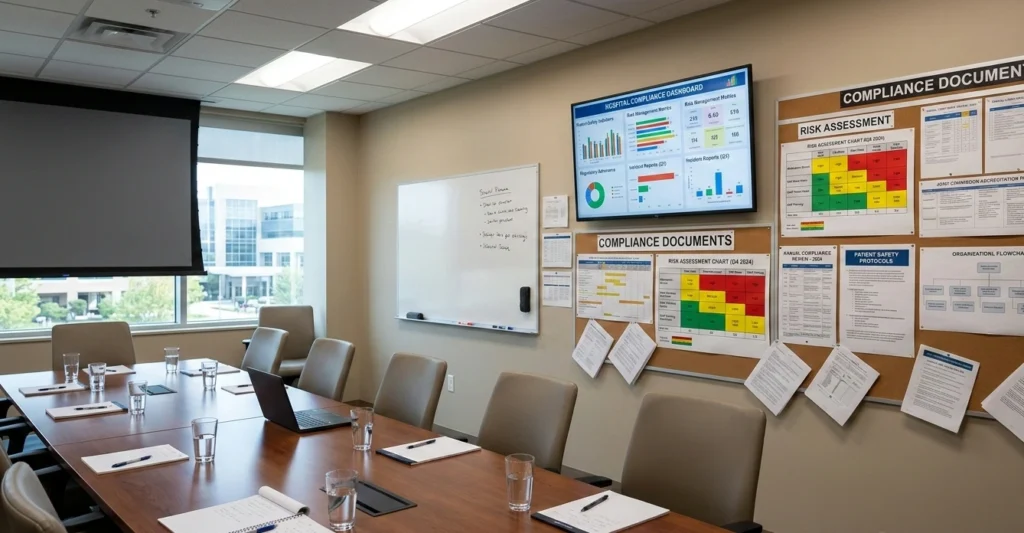
Hospitals operate within highly complex clinical and administrative environments. Even minor breakdowns in communication, documentation, equipment handling, or regulatory compliance can result in significant patient harm or institutional liability.
Healthcare risk management provides a structured framework to anticipate, identify, and mitigate such risks before they escalate into crises. Rather than reacting to adverse events, modern hospital systems prioritize preventive governance, accountability, and continuous monitoring.
For hospital administrators, risk management is not an isolated department function-it is an integral component of leadership and operational oversight.
Understanding Healthcare Risk Management
Effective risk oversight aligns with structured hospital quality management systems.
Healthcare risk management refers to systematic processes designed to reduce the likelihood of adverse events and limit their impact when they occur. These systems include incident reporting mechanisms, compliance audits, clinical protocols, staff training, and continuous performance evaluation.
A mature risk management framework integrates clinical safety with administrative controls, ensuring that hospitals function within regulatory, ethical, and operational boundaries.
Types of Risks in Hospital Settings
Operational risks are closely linked to structured hospital operations management systems.
Hospitals encounter multiple categories of risk that require coordinated oversight. Clinical risks may include medication errors, healthcare-associated infections, and procedural complications. Operational risks involve workflow inefficiencies, equipment failures, and staffing shortages. Financial risks can arise from billing errors or reimbursement delays, while regulatory risks stem from non-compliance with accreditation standards.
These risks rarely exist independently. A delay in discharge, for example, can create operational strain, increase infection exposure, and affect financial performance. Effective administrators recognise these interconnections and manage risks holistically.
Risk Identification and Reporting Systems
Structured reporting systems support compliance with broader hospital accreditation and quality standards.
Incident reporting mechanisms allow hospitals to capture near-misses, adverse events, and systemic weaknesses. Encouraging transparent reporting without punitive consequences builds a culture of safety.
Data collected from reporting systems enables administrators to conduct root cause analyses and implement corrective measures before patterns escalate into serious failures. Documentation, monitoring, and follow-up are essential elements of institutional accountability.
Risk Management and Patient Safety
Risk mitigation directly strengthens patient safety and quality improvement practices.
Preventive risk management reduces exposure to avoidable harm. Standardized protocols, structured communication pathways, and compliance audits help minimise variability in clinical practice.
Modern frameworks focus on system-based improvement rather than individual blame. By analysing processes instead of personalities, hospitals create safer and more resilient care environments.
Legal and Regulatory Responsibilities
Healthcare institutions operate under strict regulatory oversight. Risk management must align with evolving compliance requirements, accreditation norms, and documentation standards.
Failure to maintain proper governance mechanisms can result in legal claims, penalties, reputational damage, and financial loss. Proactive risk management reduces institutional vulnerability and strengthens trust among patients and stakeholders.
Role of Digital Systems in Risk Monitoring
Digital integration enhances transparency within structured digital health systems and reporting frameworks.
Electronic health records, digital dashboards, audit tracking tools, and compliance management systems enable real-time risk visibility. Data analytics allows administrators to identify trends, forecast vulnerabilities, and implement timely interventions.
Technology enhances oversight but must be supported by trained leadership capable of interpreting and acting on data responsibly.
Academic Relevance for Future Hospital Leaders
Healthcare risk management is a core competency for students pursuing the Master of Hospital Administration (MHA) program at RIHS, where governance systems, compliance structures, operational oversight, and quality management form a central part of professional training.
Understanding risk management prepares administrators to lead hospitals with accountability, resilience, and regulatory awareness. Leadership in modern healthcare requires the ability to balance patient safety, operational efficiency, and institutional sustainability.
The Way Forward for Hospital Governance
Healthcare systems are becoming increasingly complex, technologically integrated, and regulation-driven. Risk management therefore moves beyond damage control and becomes a strategic governance function.
Hospitals that invest in structured reporting mechanisms, digital monitoring tools, compliance frameworks, and leadership training are better positioned to prevent crises rather than merely respond to them. Institutional resilience depends on continuous evaluation, accountability, and improvement.
For aspiring healthcare leaders, mastering risk management principles strengthens the capacity to build safe, compliant, and high-performing institutions. At Ramyanti Institute of Health Sciences (RIHS), developing governance competency and operational awareness remains central to preparing professionals for leadership roles in hospital administration.
