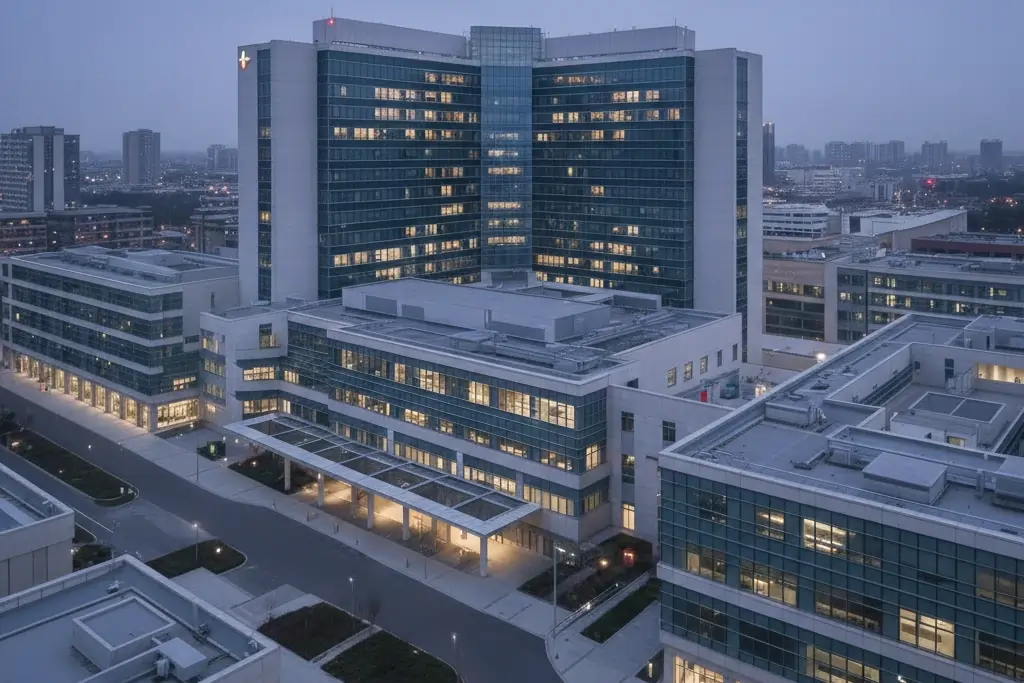
New Delhi / Global : Digital transformation is redefining healthcare education. From virtual classrooms to AI-driven learning, technology is training smarter, more connected, and future-ready health professionals.
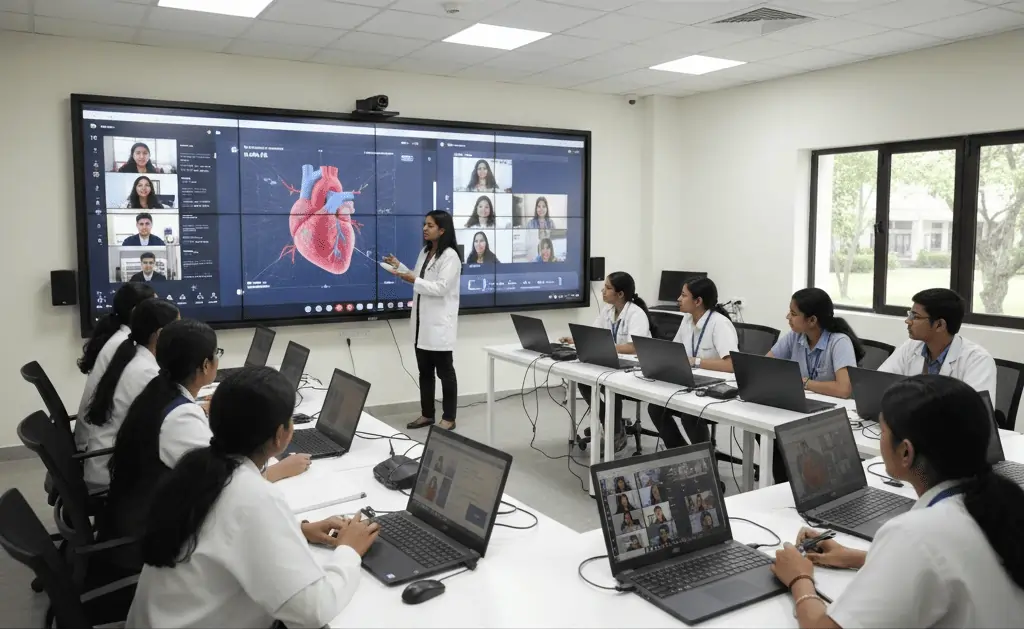
A decade ago, healthcare classrooms looked very different. Whiteboards, handwritten notes, and physical case discussions were the backbone of medical and health sciences education. But in today’s world, digital transformation has completely reshaped the way students learn, collaborate, and prepare for real-world healthcare challenges.
From virtual patient simulations and e-learning platforms to AI-driven research tools, technology is now an inseparable part of healthcare education. For students of public health, hospital administration, and allied sciences, understanding these digital shifts is essential – because the professionals of tomorrow must be as fluent in data and digital systems as they are in diagnosis and care.
The New Era of Digital Learning in Healthcare
Digital education in healthcare goes beyond just online lectures. It’s about creating immersive, data-rich, and experience-based learning environments. Universities and institutions are using tools such as:
- Virtual Reality (VR) and Augmented Reality (AR): Medical and nursing students now use 3D virtual anatomy labs and realistic patient scenarios for practice – without risk or ethical dilemmas.
- Learning Management Systems (LMS): Platforms like Moodle, Google Classroom, and Blackboard allow seamless access to lectures, assignments, and performance analytics.
- Simulation Labs: MHA and MPH students can now engage with virtual hospital operations, crisis management modules, or epidemic simulations that mirror real-life conditions.
These innovations not only enhance understanding but also make healthcare education more inclusive, allowing learners from remote areas to access quality resources without relocation.
How Artificial Intelligence (AI) Is Changing Learning
Artificial Intelligence is bringing personalization and efficiency into education. In healthcare, AI-driven tools analyze student performance and adapt the learning path accordingly. For example, if a student struggles with epidemiology models, AI platforms can recommend focused exercises and materials.
AI is also transforming research and diagnostics learning. Tools like ChatGPT for academic writing, IBM Watson Health, and PubMed AI search help students quickly explore massive datasets, medical literature, and real-time public health insights.
In clinical training, AI-based simulations can mimic patient behavior – helping students understand critical decision-making before facing real patients. For MHA students, AI dashboards simulate financial, staffing, and operational data, teaching them how to make evidence-based administrative decisions.
Virtual Classrooms and Global Collaboration
The COVID-19 pandemic accelerated a revolution in digital healthcare education. What began as a temporary solution has now evolved into a global learning ecosystem.
Institutions today offer hybrid education models, combining physical labs with virtual classes and webinars. MPH students can attend epidemiology workshops from WHO or Johns Hopkins right from their laptops. Collaborative platforms like Zoom, MS Teams, and Slack are enabling students from India to co-learn with peers from the UK, US, or Africa in real time.
For healthcare education, this means breaking barriers of geography, accessibility, and affordability. The classroom is now global – and healthcare learning has become a worldwide conversation.
Data Literacy : The New Core Skill
In modern healthcare, data is the new stethoscope. Every hospital, research center, and public health agency now depends on analytics to make decisions. Students of today must understand not just patients, but patterns – how data predicts disease, measures hospital efficiency, or informs policy.
Courses in biostatistics, data visualization, and health informatics are now essential for MHA and MPH programs. Tools like Power BI, R, and Tableau are helping future administrators and researchers translate raw data into actionable insights.
Challenges in Digital Healthcare Education
While digital transformation is empowering, it also comes with challenges. The digital divide still limits access for students in low-resource settings. Over-dependence on screens can reduce human interaction – an essential part of healthcare empathy.
Additionally, not all educators are trained to use advanced technology effectively. Bridging this gap requires faculty development, investment in digital infrastructure, and curriculum reform that balances technology with human touch.
The Future : Human + Digital Learning
The future of healthcare education will not be fully digital – it will be human-plus-digital. Technology will continue to support educators, not replace them. Virtual simulations will prepare students for real patients, but empathy and communication will still define great professionals.
For institutions like Ramyanti Institute of Health Sciences (RIHS), this transformation means preparing students for an integrated world – one where knowledge, technology, and compassion come together to define better healthcare systems.
Conclusion
Digital transformation isn’t changing healthcare education – it’s evolving it. By integrating AI, VR, data analytics, and global collaboration, education is becoming more flexible, inclusive, and future-ready. For every MPH and MHA student, learning these tools isn’t optional anymore – it’s essential.
Healthcare education is no longer confined to four walls; it’s wherever learning meets innovation. And that’s exactly where the next generation of health professionals is being shaped.