
Community health programs play a vital role in strengthening public health systems by delivering healthcare services directly at the grassroots level. As healthcare challenges continue to evolve, governments and health organizations are increasingly focusing on community-based interventions to improve access, awareness, and disease prevention across populations.
Community Health Programs: Strengthening Public Health Systems at the Grassroots Level
Public health systems are designed to improve the health of entire populations rather than focusing solely on individual treatment. One of the most effective ways to achieve this is through community health programs that operate at the grassroots level. These programs bring healthcare services closer to communities, ensuring accessibility, awareness, and early intervention.
In countries with diverse populations and varying levels of healthcare access, community-based approaches are essential. They help bridge the gap between healthcare institutions and the public by focusing on prevention, education, and local engagement.
As healthcare systems expand, community health programs have become a cornerstone of public health strategies.
Understanding Community Health Programs
Community health programs are organized initiatives aimed at improving health outcomes within specific populations. These programs focus on preventive care, health education, disease control, and access to essential healthcare services.
They operate within broader public health governance and population health systems, where policies, planning, and implementation are coordinated to address large-scale health challenges.
These programs are often implemented through collaboration between government agencies, healthcare providers, and local communities.
Role of Community Health Programs in Disease Prevention
One of the primary objectives of community health programs is disease prevention. By focusing on awareness and early detection, these programs reduce the burden on healthcare systems and improve long-term health outcomes.
Community initiatives such as vaccination drives, sanitation campaigns, and health education programs help control the spread of diseases. These efforts are closely linked with public health surveillance systems, which track disease patterns and guide intervention strategies.
Preventive healthcare at the community level is essential for building resilient public health systems.
Improving Healthcare Access and Awareness
Community health programs play a crucial role in improving healthcare accessibility, especially in underserved and rural areas. They ensure that basic healthcare services reach populations that may not have easy access to hospitals or clinics.
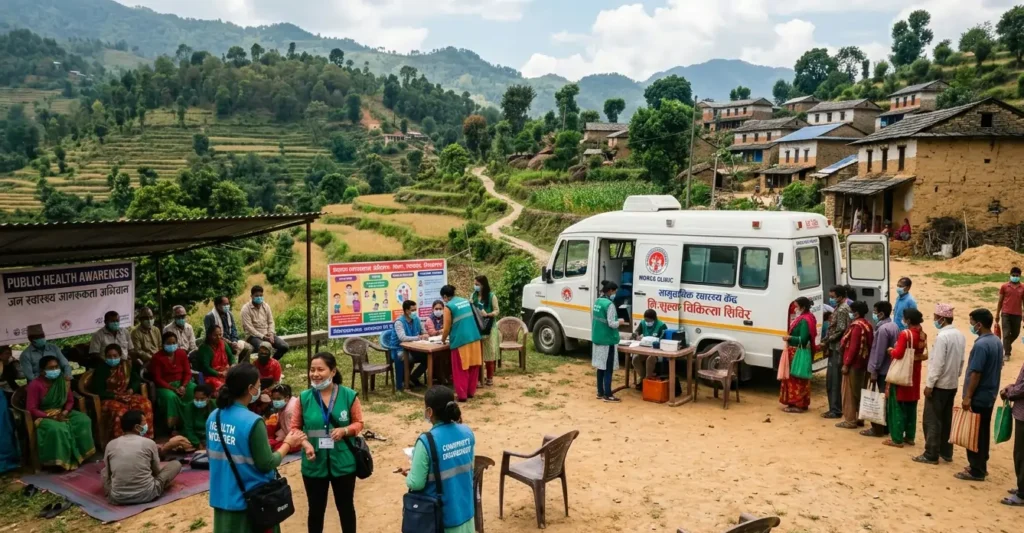
Health workers, outreach programs, and mobile healthcare units help deliver services directly to communities. These initiatives also focus on raising awareness about health issues, encouraging preventive behaviors, and promoting healthy lifestyles.
Awareness programs are often supported by social determinants of health frameworks, which highlight how economic and social conditions affect healthcare access.
Community Engagement and Participation
Successful community health programs depend on active participation from local communities. Engaging community members helps build trust, improve program effectiveness, and ensure that interventions are culturally appropriate.
Community participation also enables better identification of local health challenges and more targeted solutions. This collaborative approach strengthens the overall impact of public health initiatives.
Challenges in Implementing Community Health Programs
Despite their importance, community health programs face several challenges, including limited resources, lack of infrastructure, and variations in community awareness. Coordinating efforts across different regions and populations can also be complex.
Additionally, maintaining program sustainability and ensuring consistent funding are ongoing challenges. Addressing these issues requires strategic planning, policy support, and effective management systems.
Academic Relevance for Public Health Students
Community health programs are a key component of the Master of Public Health (MPH) program at RIHS, where students learn about population health strategies, program implementation, and public health management.
Understanding how to design and manage community-based interventions is essential for future public health professionals.
The Future of Community Health Programs
The future of community health programs is being shaped by digital technologies, data-driven planning, and integrated healthcare systems. Mobile health platforms, telemedicine, and digital awareness campaigns are enhancing the reach and effectiveness of these programs.
As healthcare systems continue to evolve, community-based approaches will remain essential for improving population health outcomes and reducing healthcare disparities.
Strong public health systems will depend on well-structured community programs that combine local engagement with strategic planning.
