
Healthcare systems are increasingly driven by data, with hospitals relying on digital information systems to manage patient records, clinical workflows, and administrative operations. As healthcare becomes more complex, effective data management has emerged as a critical component of hospital administration, influencing decision-making, efficiency, and patient care outcomes.
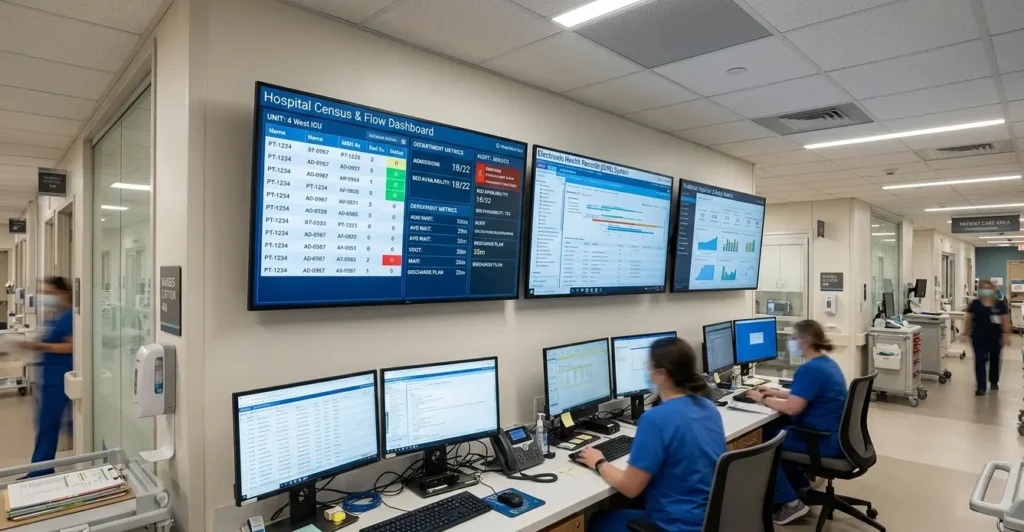
Healthcare Data Management: Managing Information Systems in Modern Hospitals
Modern hospitals generate vast amounts of data every day, ranging from patient records and diagnostic reports to operational and financial information. Managing this data effectively is essential for ensuring smooth healthcare delivery, maintaining accuracy in clinical processes, and supporting administrative decision-making.
Healthcare data management involves the collection, storage, analysis, and protection of information within healthcare systems. As hospitals increasingly adopt digital technologies, the role of data management has become more significant in improving efficiency and patient care outcomes.
The shift toward data-driven healthcare has transformed how hospitals operate, making information systems a central component of hospital administration.
Understanding Healthcare Data Management
Healthcare data management refers to the systematic handling of information related to patients, clinical services, and hospital operations. It includes electronic health records, data storage systems, and analytics platforms that support healthcare delivery.
These systems operate within broader hospital administration and healthcare management frameworks, where data plays a key role in coordinating clinical and administrative processes.
Effective data management ensures that accurate information is available when needed, enabling healthcare providers to make informed decisions.
Role of Data in Hospital Operations
Data is central to hospital operations, supporting everything from patient admissions and treatment planning to discharge and follow-up care. Accurate data helps hospitals manage workflows efficiently and reduce errors in clinical and administrative processes.
These systems are closely integrated with hospital operations management structures, where data-driven insights help optimize workflows and resource allocation.
Efficient data management improves coordination between departments and enhances overall operational performance.
Data Security and Privacy in Healthcare
Protecting patient data is a critical responsibility for healthcare institutions. Hospitals must ensure that sensitive information is stored securely and accessed only by authorized personnel.
Data security systems include encryption, access controls, and compliance with healthcare regulations. Maintaining data privacy is essential for building trust between patients and healthcare providers.
Data-Driven Decision Making
Healthcare data enables administrators to analyze trends, monitor performance, and make strategic decisions. Data analytics helps hospitals identify patterns, improve resource utilization, and enhance patient care.
These insights also support hospital quality management systems, where performance metrics are used to maintain standards and improve outcomes.
Data-driven decision-making is becoming a key factor in improving healthcare efficiency and effectiveness.
Challenges in Healthcare Data Management
Despite its importance, healthcare data management faces several challenges, including data fragmentation, system integration issues, and the need for standardized processes. Managing large volumes of data while ensuring accuracy and security can be complex.
Hospitals must also invest in technology infrastructure and skilled professionals to manage data systems effectively. Addressing these challenges is essential for building reliable healthcare information systems.
Academic Relevance for Future Hospital Leaders
Healthcare data management is an essential component of the Master of Hospital Administration (MHA) program at RIHS, where students learn about digital health systems, data analytics, and healthcare information management.
Understanding data systems enables future administrators to improve operational efficiency and support evidence-based decision-making.
The Future of Data Management in Healthcare
The future of healthcare data management is being shaped by advanced technologies such as artificial intelligence, machine learning, and integrated digital health platforms. These technologies enable hospitals to process large datasets, predict patient outcomes, and optimize healthcare delivery.
As healthcare systems continue to evolve, data management will remain a critical component of hospital administration. Institutions that adopt advanced data systems will be better equipped to deliver efficient, high-quality healthcare services.
