
Hospitals depend not only on advanced medical infrastructure and technology but also on skilled healthcare professionals who ensure smooth patient care and hospital operations. As healthcare systems become more complex, healthcare human resource (HR) management has emerged as a critical function in hospitals, helping institutions recruit, train, coordinate, and retain healthcare professionals.
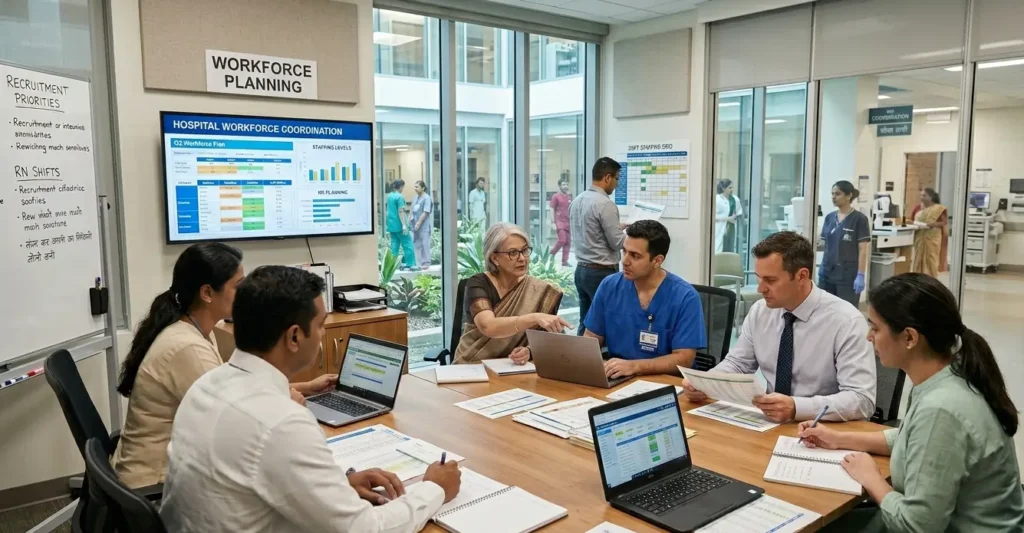
Healthcare HR Management: Building an Effective Workforce in Hospitals
Hospitals are among the most workforce-intensive institutions in any sector. Doctors, nurses, technicians, administrators, support staff, and specialists work together to ensure healthcare services are delivered effectively. However, managing such a diverse workforce requires more than staffing schedules or recruitment efforts. It requires structured human resource management systems that support workforce planning, employee development, and operational efficiency.
Healthcare HR management plays a central role in ensuring hospitals function smoothly. From hiring qualified professionals and maintaining staffing levels to improving workplace culture and reducing burnout, HR systems directly influence healthcare delivery and patient outcomes.
As healthcare systems continue to expand and patient expectations rise, hospitals increasingly depend on strong workforce management to maintain quality care and institutional performance.
Understanding Healthcare HR Management
Healthcare HR management refers to the planning, recruitment, training, coordination, and performance management of healthcare professionals within hospitals and healthcare institutions. The goal is to ensure that the right workforce is available in the right roles at the right time.
Unlike traditional industries, healthcare workforce management involves unique challenges such as staff shortages, emergency response planning, clinical skill requirements, and round-the-clock service delivery.
These systems operate within broader hospital administration and healthcare management frameworks, where workforce coordination directly affects operational performance and service quality.
Effective workforce planning helps hospitals maintain stability while improving healthcare efficiency.
Recruitment and Workforce Planning in Hospitals
Recruiting skilled healthcare professionals is one of the biggest challenges hospitals face today. Healthcare organizations must continuously hire qualified staff while responding to changing patient volumes and healthcare demands.
Hospital HR teams work closely with department leaders to identify workforce needs, recruit specialized professionals, and maintain balanced staffing systems. Proper workforce planning helps prevent staff shortages that can affect patient care and operational performance.
Healthcare workforce planning is also closely linked with leadership in hospital administration, where strong leadership helps institutions improve employee coordination and organizational culture.
Hospitals that invest in effective workforce planning often experience better operational outcomes and staff satisfaction.
Employee Training and Professional Development
Healthcare environments constantly evolve due to changing technologies, treatment methods, and healthcare regulations. Hospitals must therefore ensure that employees receive continuous training and professional development opportunities.
Regular training programs improve clinical skills, communication, patient handling, and healthcare compliance. Workforce development also helps healthcare institutions adapt to digital systems and changing patient expectations.
Strong HR systems encourage professional growth, helping hospitals improve staff retention and workplace engagement.
Role of HR Management in Patient Experience
Healthcare HR management indirectly affects patient care by shaping workforce performance and employee engagement. Hospitals with well-supported staff often deliver better patient experiences, stronger communication, and more efficient healthcare services.
When healthcare professionals work in supportive environments, patient interactions tend to improve, contributing to better satisfaction and trust.
These outcomes are closely connected with patient experience management systems, where workforce behavior and communication influence healthcare quality.
An effective workforce is one of the strongest foundations of patient-centered care.
Challenges in Healthcare Workforce Management
Healthcare institutions continue to face challenges related to workforce shortages, employee burnout, rising workload pressures, and staff retention. The COVID-19 pandemic further highlighted the importance of maintaining resilient healthcare workforces capable of responding to emergencies.
Hospitals must also manage changing workforce expectations, technological transitions, and increasing demands for specialized healthcare skills. Addressing these issues requires strategic HR systems, supportive leadership, and effective organizational planning.
Modern healthcare systems increasingly depend on workforce data and planning tools to improve coordination and institutional performance.
Academic Relevance for Future Hospital Leaders
Healthcare HR management is an important area of study within the Master of Hospital Administration (MHA) program at RIHS, where students learn about workforce planning, healthcare operations, organizational leadership, and hospital management systems.
Understanding workforce management helps future hospital administrators build effective healthcare teams and strengthen institutional performance.
The Future of Healthcare HR Management
The future of healthcare HR management is increasingly influenced by digital workforce systems, healthcare analytics, and employee well-being strategies. Hospitals are adopting technology-driven HR systems to improve scheduling, performance tracking, recruitment, and workforce planning.
As healthcare systems continue to grow, effective workforce management will remain essential for maintaining healthcare quality, operational efficiency, and employee satisfaction.
Hospitals that invest in strong HR systems and workforce development will be better positioned to deliver sustainable and patient-centered healthcare services.
