
The strength of any healthcare system depends not only on hospitals and technology but also on the people who deliver healthcare services. As countries continue expanding primary healthcare, digital health systems, and disease prevention programs, workforce planning has become one of the most important priorities for sustainable public health development. In India, growing investments in healthcare infrastructure and community-based services are further increasing the demand for skilled public health professionals.
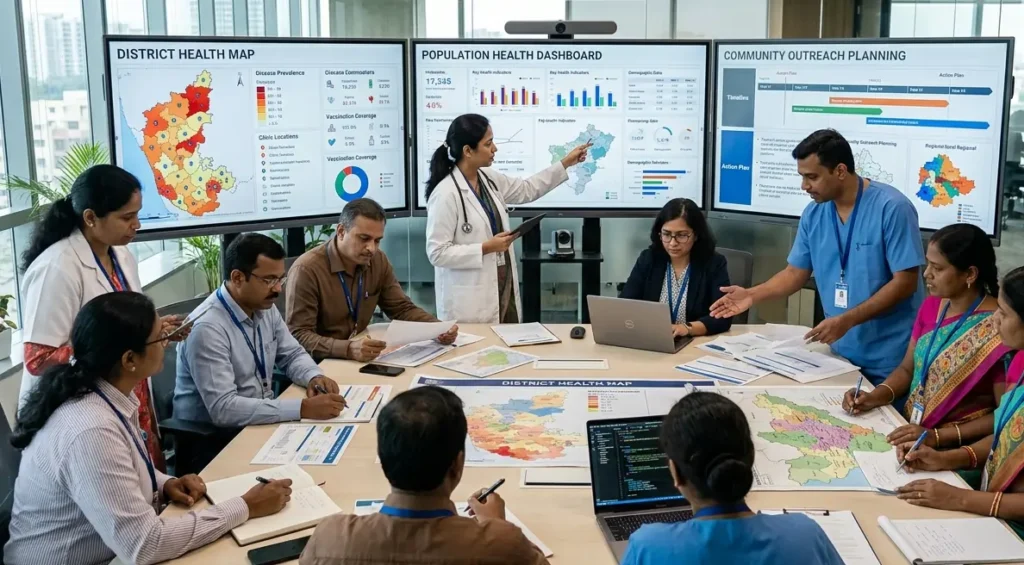
Healthcare systems are often evaluated by the number of hospitals they build or the technologies they adopt. However, behind every successful healthcare system is a skilled workforce capable of delivering quality care to individuals and communities.
Doctors, nurses, public health professionals, epidemiologists, laboratory scientists, community health workers, and healthcare administrators all contribute to strengthening healthcare delivery. Ensuring that these professionals are available in the right numbers, possess appropriate skills, and are distributed where they are needed most is the objective of health workforce planning.
As healthcare needs continue to evolve due to population growth, ageing populations, emerging diseases, and digital transformation, workforce planning has become a strategic priority for governments and healthcare organizations worldwide.
Current Trends Shaping Health Workforce Planning
Healthcare workforce planning is receiving increased attention across the world. International health organizations continue to highlight workforce shortages as one of the major challenges affecting healthcare delivery. In India, initiatives such as Ayushman Bharat, Ayushman Arogya Mandirs, expanding medical education, and digital health transformation are creating new opportunities while increasing the demand for skilled healthcare professionals.
The healthcare workforce is also changing beyond traditional clinical roles. Public health specialists, health data analysts, health informatics professionals, epidemiologists, and community health experts are becoming increasingly important as healthcare systems focus more on prevention, surveillance, and population health management.
These developments demonstrate that workforce planning is no longer simply an administrative exercise—it is becoming a foundation for stronger public health systems.
Understanding Health Workforce Planning
Health workforce planning is the process of assessing current and future healthcare workforce requirements to ensure that healthcare systems have the right professionals with the right skills at the right place and time.
It involves forecasting workforce demand, identifying skill gaps, planning education and training, improving workforce distribution, and preparing healthcare organizations for future healthcare challenges.
Effective workforce planning helps governments and healthcare institutions respond to changing disease patterns, demographic shifts, technological advancements, and public health emergencies.
Why Does Workforce Planning Matter for Public Health?
A well-planned workforce directly influences healthcare accessibility, service quality, and health outcomes. Without sufficient healthcare professionals, even well-equipped hospitals and healthcare facilities may struggle to meet patient needs.
Countries investing in primary healthcare and preventive health services increasingly recognize that workforce planning is essential for reducing health inequalities and improving healthcare access across diverse populations.
How does workforce planning improve healthcare access?
When healthcare professionals are strategically distributed across urban and rural regions, communities receive more timely medical care, preventive services, and public health support. Effective workforce planning therefore contributes to better health outcomes while strengthening healthcare resilience.
Workforce Planning and Rural Healthcare
One of the biggest workforce challenges is ensuring that healthcare professionals are available in underserved and rural communities.
Many countries continue to experience uneven distribution of doctors, nurses, and specialists, with healthcare workers often concentrated in metropolitan areas. Strengthening rural healthcare systems therefore depends not only on infrastructure development but also on long-term workforce planning and retention strategies.
Providing education, career development opportunities, and supportive working environments can encourage healthcare professionals to serve in communities where they are needed most.
Community-Based Healthcare Requires Skilled Professionals
Public health extends beyond hospitals. Community health workers, public health educators, outreach teams, and preventive healthcare professionals all play an important role in improving population health.
Successful community health programs rely on trained professionals who understand local healthcare needs and work closely with communities to promote healthier lifestyles, disease prevention, and health education.
Why are community health workers important?
Community-based professionals often serve as the first point of contact for healthcare services. They help increase health awareness, encourage preventive care, support vaccination campaigns, and connect communities with formal healthcare systems.
Data Is Transforming Workforce Planning
Modern workforce planning increasingly depends on healthcare data. Population demographics, disease trends, healthcare utilization, and workforce availability all help decision-makers predict future staffing requirements.
Advances in health data analytics allow healthcare organizations to identify workforce shortages, forecast future demand, and allocate resources more effectively.
As healthcare systems become more data-driven, workforce planning will increasingly rely on predictive analytics and evidence-based decision-making.
Can technology strengthen workforce planning?
Yes. Digital health platforms, workforce analytics, artificial intelligence, and geographic information systems are helping healthcare organizations improve workforce forecasting, optimize resource allocation, and support strategic planning.
Why This Matters for Future Public Health Professionals
Health workforce planning is an important area of study within the Master of Public Health (MPH) program at RIHS. Future public health professionals are expected to understand workforce development, healthcare policy, community engagement, and strategic planning that strengthen healthcare systems.
Professionals who understand workforce planning will be better prepared to contribute to sustainable healthcare development and improved population health.
Looking Ahead
Healthcare systems will continue evolving as populations grow, disease patterns change, and digital technologies reshape healthcare delivery. Building hospitals alone will not be sufficient to meet future healthcare demands. Success will increasingly depend on developing a skilled, adaptable, and well-distributed healthcare workforce.
For this reason, health workforce planning will remain a cornerstone of effective public health systems, supporting stronger communities, resilient healthcare organizations, and healthier populations for years to come.
