
Healthcare organizations today are under greater pressure than ever to deliver high-quality patient care while managing operational efficiency, financial sustainability, and regulatory compliance. With hospitals increasingly adopting digital technologies, quality accreditation standards, and data-driven decision-making, healthcare performance management has become a strategic priority rather than simply an administrative function. Measuring performance allows hospitals to identify opportunities for improvement, optimize resources, and continuously enhance patient outcomes.
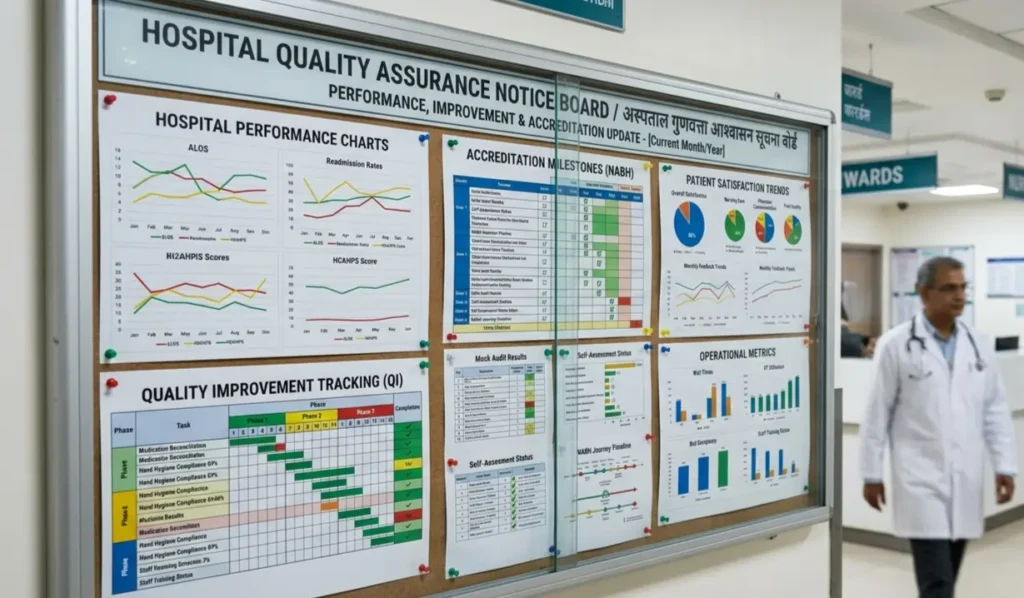
Running a modern hospital is no longer limited to treating patients and managing clinical services. Healthcare organizations today must balance patient expectations, financial sustainability, workforce productivity, technological advancement, regulatory compliance, and quality improvement-all while ensuring that patient care remains safe and effective.
Hospital administrators are therefore expected to make decisions based on measurable performance rather than assumptions. Whether the objective is reducing patient waiting times, improving clinical outcomes, increasing patient satisfaction, or optimizing operational costs, healthcare leaders need reliable data that reflects how well the organization is performing.
This is where healthcare performance management becomes essential.
Rather than focusing only on financial results, performance management provides hospitals with a structured framework to measure, evaluate, and continuously improve clinical quality, operational efficiency, workforce productivity, patient experience, and organizational performance. It enables leaders to understand what is working well, identify areas requiring improvement, and implement strategies that support long-term institutional success.
As healthcare systems continue to evolve, performance management is becoming one of the most valuable competencies for hospital administrators and future healthcare leaders.
Current Trends Driving Healthcare Performance Management
Healthcare organizations around the world are moving away from measuring success solely through the number of patients treated or hospital occupancy rates. Today, greater emphasis is placed on healthcare quality, patient outcomes, operational efficiency, patient safety, and value-based care.
In India, hospitals are increasingly investing in digital hospital information systems, electronic medical records, business intelligence dashboards, and quality improvement initiatives to strengthen decision-making. Accreditation standards such as NABH have also encouraged hospitals to adopt continuous monitoring of clinical and operational performance instead of relying on periodic evaluations alone.
At the same time, artificial intelligence and predictive analytics are helping healthcare organizations identify performance trends, forecast resource requirements, and support evidence-based management decisions. These developments demonstrate that performance management is no longer just a reporting function-it has become a strategic tool for improving healthcare delivery.
Healthcare Insight (2026)
Leading hospitals are increasingly using real-time dashboards to monitor patient flow, quality indicators, infection control, financial performance, staff productivity, and patient satisfaction. Instead of waiting for monthly reports, healthcare leaders can now identify operational challenges early and respond more quickly to improve hospital performance.
What Is Healthcare Performance Management?
Healthcare performance management is the systematic process of measuring, monitoring, analyzing, and improving how a healthcare organization performs against its strategic objectives.
It involves collecting meaningful data, evaluating performance indicators, identifying opportunities for improvement, and implementing changes that enhance healthcare quality and operational effectiveness.
Performance management extends across nearly every department within a hospital. Clinical services monitor treatment outcomes and patient safety, finance departments evaluate cost efficiency, human resource teams assess workforce productivity, and administrators review operational performance to ensure organizational goals are being achieved.
These activities form an essential part of effective hospital administration, where evidence-based decision-making supports both organizational growth and high-quality patient care.
Why Measuring Performance Matters
Healthcare organizations generate enormous amounts of information every day. Admissions, outpatient visits, surgeries, laboratory investigations, patient feedback, financial transactions, staffing levels, and clinical outcomes all provide valuable insights into hospital performance.
Without a structured performance management system, much of this information remains underutilized. Administrators may struggle to identify operational inefficiencies, quality gaps, or emerging risks before they affect patient care.
Performance measurement transforms raw data into actionable insights. It enables hospital leaders to evaluate progress, compare outcomes over time, prioritize improvement initiatives, and make informed strategic decisions.
Perhaps more importantly, it encourages a culture of accountability throughout the organization. When departments regularly monitor performance indicators, they become more proactive in identifying challenges and implementing improvements rather than reacting after problems arise.
Why is continuous performance monitoring important in hospitals?
Healthcare delivery is dynamic. Patient volumes fluctuate, clinical demands change, and operational challenges can emerge unexpectedly. Continuous performance monitoring allows hospital administrators to identify trends early, respond more effectively, and maintain consistent standards of quality and patient safety.
Key Performance Indicators (KPIs) in Hospitals
Performance management depends on selecting meaningful indicators that accurately reflect organizational performance. Rather than measuring every available metric, hospitals typically focus on key performance indicators (KPIs) aligned with their strategic objectives.
Clinical quality indicators may include infection rates, readmission rates, medication safety, mortality trends, and patient recovery outcomes. Operational indicators often examine emergency department waiting times, average length of stay, bed occupancy, operating theatre utilization, and appointment scheduling efficiency.
Financial performance indicators help administrators understand revenue performance, operational costs, resource utilization, and budget management, while workforce indicators evaluate staff retention, absenteeism, employee engagement, and professional development.
Patient-centered indicators have also become increasingly important. Patient satisfaction, communication quality, complaint resolution, and overall care experience now play a significant role in evaluating healthcare performance because they directly influence trust, reputation, and long-term organizational success.
Rather than viewing these indicators independently, successful hospitals analyze them together to gain a comprehensive understanding of organizational performance.
How do hospitals decide which performance indicators to monitor?
The choice of performance indicators depends on the hospital’s strategic goals, patient population, regulatory requirements, and quality priorities. Effective KPIs are measurable, relevant, achievable, and capable of supporting better decision-making. Hospitals review these indicators regularly to ensure they continue reflecting organizational priorities as healthcare needs evolve.
Data-Driven Decision Making in Healthcare
Performance management is most effective when it supports better decision-making rather than simply producing reports. Modern hospitals generate vast amounts of operational and clinical data every day, but meaningful improvement occurs only when that information is analyzed and translated into action.
Hospital administrators increasingly rely on dashboards, analytics platforms, and hospital information systems to monitor performance in real time. These tools help leaders identify trends, compare departmental performance, anticipate resource requirements, and respond quickly to emerging challenges.
For example, if patient waiting times begin increasing in the emergency department, performance data allows administrators to investigate staffing patterns, patient flow, or resource allocation before delays begin affecting patient satisfaction or clinical outcomes.
Rather than relying solely on intuition, healthcare leaders can use evidence-based insights to improve operational efficiency while maintaining high standards of patient care.
How does data improve hospital performance?
Reliable performance data helps administrators make informed decisions about staffing, budgeting, quality improvement, resource utilization, and patient services. It also allows hospitals to evaluate whether improvement initiatives are producing measurable results and where additional attention may be needed.
Healthcare Insight (2026)
Many leading hospitals are moving toward predictive analytics, where historical and real-time performance data help forecast patient demand, workforce requirements, and resource utilization. This enables hospital leaders to plan proactively rather than responding only after operational challenges occur.
Building a Culture of Continuous Improvement
Performance management should not be viewed as an annual review exercise. The most successful healthcare organizations create a culture where continuous improvement becomes part of everyday practice.
When departments regularly review performance indicators, discuss improvement opportunities, and share best practices, hospitals become more agile and responsive to changing healthcare needs. Clinical teams, nursing staff, administrators, finance departments, and support services all contribute to organizational performance, making collaboration essential.
Performance reviews should therefore encourage learning rather than assigning blame. When healthcare professionals understand how their work contributes to organizational goals, they are more likely to participate actively in quality improvement initiatives.
Healthcare organizations that promote transparency and teamwork often achieve better clinical outcomes, higher patient satisfaction, and stronger operational performance.
Leadership Drives Performance Excellence
Technology and performance indicators provide valuable information, but meaningful improvement depends on leadership. Hospital leaders establish priorities, allocate resources, encourage accountability, and create an environment where continuous improvement becomes part of the organizational culture.
Effective leadership in hospital administration helps departments align their individual objectives with the hospital’s broader strategic goals. Leaders also play an important role in communicating performance expectations, supporting professional development, and recognizing achievements that contribute to organizational excellence.
Strong leadership ensures that performance management becomes a practical management tool rather than simply another reporting requirement.
Performance Management and Hospital Quality
Quality improvement and performance management are closely connected. Hospitals cannot improve what they do not measure, and consistent measurement allows healthcare organizations to identify opportunities for safer, more efficient, and more patient-centered care.
Monitoring clinical quality indicators, patient safety events, infection prevention measures, and service delivery outcomes helps organizations continuously evaluate healthcare quality. These measurements also support accreditation readiness and encourage standardized clinical practices across departments.
Healthcare organizations that prioritize hospital quality management often develop stronger systems for continuous learning, risk management, and patient safety improvement.
Financial Performance Supports Sustainable Healthcare
Delivering excellent patient care also requires responsible financial management. Performance management helps administrators understand whether hospital resources are being utilized effectively while maintaining long-term sustainability.
Financial indicators such as cost per patient, departmental expenditure, budget utilization, revenue performance, and resource efficiency provide valuable insights for hospital leadership. These measurements support strategic investment decisions without compromising healthcare quality.
Effective hospital financial management therefore complements performance management by ensuring that quality improvement initiatives remain financially viable.
Project Management Turns Performance Insights into Action
Identifying performance gaps is only the first step. Hospitals must also implement structured improvement projects to address identified challenges. Whether improving patient flow, upgrading digital systems, redesigning clinical processes, or expanding healthcare services, project management provides the framework for translating performance insights into measurable improvements.
Healthcare organizations that integrate healthcare project management with performance monitoring are often better positioned to implement organizational change successfully while minimizing operational disruption.
Why This Matters for Future Healthcare Leaders
Healthcare performance management has become an essential competency for professionals pursuing the Master of Hospital Administration (MHA) program. Future hospital administrators will increasingly be expected to analyze healthcare data, evaluate organizational performance, lead quality improvement initiatives, and make evidence-based management decisions.
Understanding performance management prepares future healthcare leaders to balance clinical quality, operational efficiency, financial sustainability, and patient experience within increasingly complex healthcare environments.
Looking Ahead
Healthcare organizations will continue evolving as digital technologies, artificial intelligence, value-based healthcare, and patient-centered care reshape the healthcare landscape. Future hospitals will increasingly depend on real-time performance monitoring, predictive analytics, and continuous quality improvement to remain efficient and responsive.
For hospital administrators, success will no longer be measured only by the number of patients treated but also by the quality of care delivered, the experiences patients receive, the effectiveness of resource utilization, and the organization’s ability to adapt to changing healthcare needs.
Ultimately, healthcare performance management will remain a fundamental pillar of modern hospital administration, helping healthcare organizations deliver safer care, improve operational excellence, and create sustainable value for patients, professionals, and communities.
