
Health Communication in Public Health: Building Awareness for Healthier Communities
In today’s connected world, a single social media post can influence the health decisions of millions of people within hours. While digital technology has made healthcare information more accessible than ever before, it has also accelerated the spread of misinformation, creating new challenges for governments, healthcare organizations, and public health professionals.
From encouraging childhood immunization and promoting mental health awareness to educating communities about lifestyle diseases and responding to disease outbreaks, effective communication has become one of the most powerful tools in modern public health. Medical treatments save lives, but clear, trustworthy, and timely communication often determines whether people seek care, follow medical advice, or adopt healthier lifestyles.
The role of health communication has expanded significantly over the past few years. Public health agencies now rely on artificial intelligence, multilingual awareness campaigns, mobile health applications, social media platforms, and community outreach initiatives to reach diverse populations. These strategies not only improve public awareness but also help healthcare organizations respond more effectively to emerging health challenges.
As healthcare systems continue to evolve, communication is no longer viewed as a supporting activity-it has become a strategic public health intervention that shapes policies, strengthens community trust, and improves population health outcomes. Understanding health communication is therefore essential for future public health professionals who aspire to design impactful awareness campaigns and build healthier communities.
Why Health Communication Matters More Than Ever
Healthcare has entered an era where access to information is almost unlimited, yet access to reliable information remains a major challenge. Every day, millions of people search online for advice about nutrition, vaccines, chronic diseases, mental health, and preventive care. Unfortunately, misleading or inaccurate information can spread just as quickly as scientifically verified guidance.
This is where health communication becomes essential. It bridges the gap between medical science and public understanding by translating complex healthcare information into messages that are accurate, practical, and easy to understand. Effective communication enables individuals to make informed decisions while encouraging healthy behaviors that benefit both individuals and communities.
For example, public awareness campaigns have played a significant role in increasing vaccination coverage, promoting tobacco cessation, improving maternal health, encouraging early disease screening, and educating people about lifestyle-related conditions such as diabetes and hypertension. These achievements are possible because healthcare professionals understand that information alone is not enough-people must also trust, understand, and act upon that information.
Health communication also supports broader public health systems by ensuring that healthcare policies, preventive programs, and emergency responses reach the communities they are designed to serve.
Healthcare Insight
According to recent healthcare trends, organizations are investing more in digital public health communication than ever before. AI-assisted messaging, multilingual campaigns, personalized health education, and community-driven awareness initiatives are becoming central components of national and global public health strategies.
What Is Health Communication?
Health communication is the science and practice of developing, sharing, and evaluating health-related information that helps individuals and communities make informed decisions about their well-being. It combines public health knowledge with communication strategies, behavioral science, psychology, education, and digital technology to encourage healthier behaviors and improve health outcomes.
Unlike general communication, health communication is designed with a clear purpose. Every campaign, educational resource, or awareness initiative aims to influence knowledge, attitudes, or behaviors that contribute to better health. Whether encouraging regular health check-ups, promoting healthy eating habits, increasing vaccination acceptance, or improving awareness about infectious diseases, effective communication serves as a bridge between scientific evidence and public action.
Successful health communication is also highly audience-specific. The way healthcare professionals explain disease prevention to school children differs significantly from how they communicate with elderly populations, healthcare workers, or policymakers. Understanding cultural values, language preferences, literacy levels, and community needs allows public health professionals to create messages that people can understand and trust.
Why Is Health Communication the Backbone of Public Health?
Every successful public health initiative depends on effective communication. Vaccination drives, sanitation campaigns, maternal and child health programs, nutrition awareness, tobacco control, mental health promotion, and emergency preparedness all require active public participation. Without clear communication, even the most scientifically sound healthcare interventions may fail to achieve their intended impact.
Communication not only educates people but also motivates them to change behaviors that directly influence their health. Public health professionals use evidence-based communication strategies to encourage preventive healthcare, improve treatment adherence, reduce risky behaviors, and strengthen trust between healthcare providers and communities.
For example, effective communication plays a vital role in supporting disease prevention strategies by helping communities understand how infections spread, why preventive measures are important, and how individual actions contribute to healthier populations. Similarly, many community health programs achieve greater success because local healthcare workers actively engage residents through awareness sessions, educational workshops, and culturally appropriate communication methods.
What Are the Core Principles of Effective Health Communication?
Effective health communication is built on trust, clarity, and relevance. Public health professionals must ensure that every message is scientifically accurate while remaining simple enough for diverse audiences to understand. Information should be culturally sensitive, evidence-based, accessible, and focused on practical actions that individuals can adopt in their daily lives.
Communication is also a two-way process. Rather than simply delivering information, healthcare organizations increasingly seek feedback from communities to understand public concerns, identify misconceptions, and improve future communication strategies. This collaborative approach strengthens public trust and increases the likelihood that people will adopt recommended health behaviors.
In modern healthcare, communication is no longer measured only by the number of people reached but by its ability to create lasting behavior change and improve community health outcomes.
How Has Digital Technology Transformed Health Communication?
The way public health organizations communicate has changed dramatically over the last decade. Earlier, awareness campaigns relied primarily on newspapers, radio broadcasts, television advertisements, posters, and community meetings. While these traditional methods continue to play an important role, today’s healthcare professionals have access to digital platforms that allow them to reach millions of people instantly.
Government agencies, hospitals, public health organizations, and non-governmental organizations now use websites, mobile applications, email newsletters, SMS alerts, webinars, podcasts, and social media platforms to share evidence-based health information. These channels make it possible to deliver timely updates during disease outbreaks, educate people about preventive healthcare, and encourage healthier lifestyles regardless of geographical location.
Digital communication also allows healthcare organizations to monitor engagement, evaluate campaign effectiveness, and refine their messaging based on real-world data. This shift has transformed health communication from one-way information sharing into an interactive conversation between healthcare providers and communities.
How Does Social Media Influence Public Health?
Social media has become one of the most influential communication tools in public health. Platforms such as YouTube, Instagram, Facebook, LinkedIn, and X enable healthcare organizations to communicate directly with the public through videos, infographics, live sessions, and educational campaigns.
Public health institutions use these platforms to promote vaccination drives, spread awareness about infectious diseases, encourage healthy eating habits, improve mental health literacy, and share emergency health advisories. During outbreaks or natural disasters, social media often becomes the fastest way to distribute verified information and reduce public panic.
However, these same platforms can also amplify misinformation. Rumors about vaccines, miracle cures, or unverified treatments can spread rapidly and influence health-related decisions. This makes responsible health communication more important than ever. Public health professionals must not only create accurate content but also build trust by responding quickly, communicating transparently, and engaging respectfully with communities.
Healthcare Insight
Modern public health professionals are expected to understand digital communication almost as well as epidemiology. Skills such as content strategy, digital campaign management, social media analytics, and audience engagement are becoming valuable competencies in the public health workforce.
Can Artificial Intelligence Improve Health Communication?
Artificial intelligence is changing how health information is created, translated, and delivered. Healthcare organizations are using AI-powered chatbots to answer common health questions, automate appointment reminders, and guide patients toward appropriate healthcare services. Translation technologies are helping public health messages reach multilingual populations, while predictive analytics assists organizations in identifying communities that may benefit from targeted awareness campaigns.
AI also enables healthcare teams to analyze public sentiment, detect misinformation trends, and evaluate how communities respond to different communication strategies. These insights help public health professionals design more personalized and effective campaigns.
Despite these advantages, AI should complement-not replace-human expertise. Every health message must be reviewed by qualified professionals to ensure scientific accuracy, cultural sensitivity, and ethical responsibility. Building trust remains a human responsibility, even in an increasingly automated healthcare environment.
Why Is Community Engagement Essential for Successful Health Communication?
Health communication is most effective when communities participate actively rather than simply receiving information. Successful public health initiatives involve listening to people’s concerns, understanding local cultural practices, and developing communication strategies that reflect community needs.
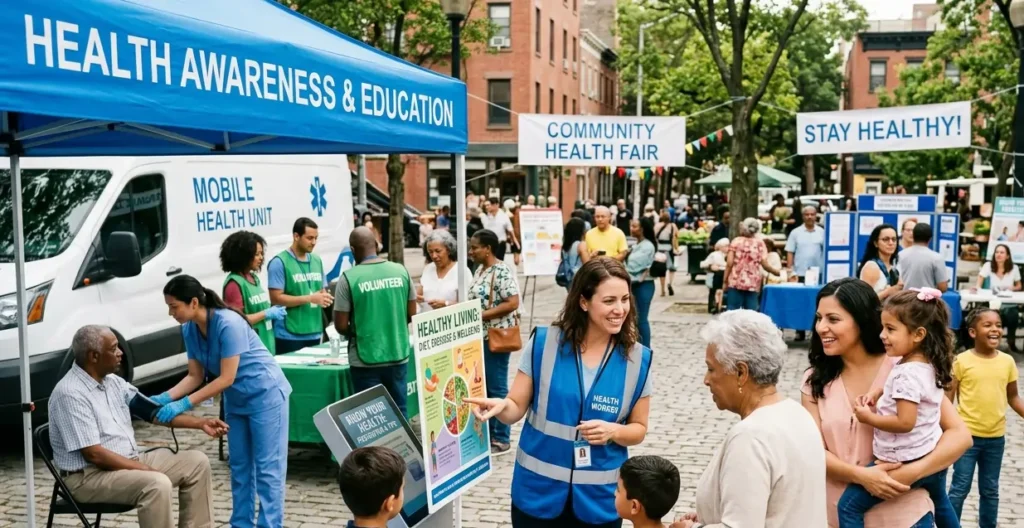
Community health workers, local leaders, teachers, volunteers, and healthcare professionals all contribute to creating awareness at the grassroots level. Whether the objective is improving maternal health, increasing vaccination coverage, promoting sanitation, or encouraging healthy lifestyles, community participation significantly increases the effectiveness of communication efforts.
Many successful community health programs rely on trained health educators and frontline workers who build long-term relationships with local communities. Their ability to communicate in local languages and understand cultural contexts makes health messages more relatable and trustworthy.
What Challenges Limit Effective Health Communication?
Although communication technologies continue to evolve, several barriers still prevent health information from reaching everyone equally.
One of the biggest challenges is health misinformation. False or misleading content shared through digital platforms can reduce vaccine confidence, promote unsafe treatments, and discourage people from seeking timely medical care. Countering misinformation requires continuous public education supported by transparent and evidence-based communication.
Health literacy is another important challenge. Many individuals struggle to understand medical terminology or complex healthcare instructions, making it difficult to make informed decisions. Public health professionals therefore focus on using clear, simple language that is accessible to diverse audiences.
Language diversity, cultural differences, limited internet access, and the digital divide also affect communication effectiveness, particularly in remote areas. Strengthening rural healthcare systems through locally relevant communication strategies helps bridge these gaps and ensures that healthcare information reaches underserved populations.
Why Is Health Workforce Planning Important for Better Communication?
Behind every successful awareness campaign is a well-trained public health workforce. Health educators, epidemiologists, communication specialists, community health officers, ASHA workers, and public health managers all contribute to designing and delivering effective health messages.
As healthcare systems become increasingly digital and data-driven, organizations need professionals who can combine scientific knowledge with communication, leadership, and technology. Effective health workforce planning ensures that enough skilled professionals are available to support awareness campaigns, respond to public health emergencies, and improve community engagement across different regions.
What Career Opportunities Are Available in Health Communication?
The growing importance of health communication has created career opportunities across government health departments, hospitals, research institutions, international organizations, public health consulting firms, pharmaceutical companies, digital health startups, and non-governmental organizations.
Professionals may work as health communication specialists, public health educators, community outreach coordinators, health promotion officers, digital campaign managers, policy communication advisors, or risk communication experts. These roles combine public health knowledge with strategic communication to improve health outcomes at local, national, and global levels.
As digital healthcare continues to expand, professionals with expertise in communication, behavioral science, and health promotion are expected to remain in high demand.
Why This Matters for Future Public Health Professionals
Technical knowledge alone is no longer enough to solve today’s public health challenges. Future professionals must also know how to communicate scientific evidence in ways that inspire trust and encourage action. Whether leading vaccination campaigns, promoting preventive healthcare, managing health emergencies, or educating communities about chronic diseases, communication skills are becoming an essential part of public health leadership.
Students who want to develop expertise in epidemiology, health promotion, research, policy, leadership, and communication can strengthen these competencies through a Master of Public Health (MPH) program, where they learn to design evidence-based interventions that improve community health.
Looking Ahead
Health communication will continue to evolve alongside artificial intelligence, digital health technologies, wearable devices, predictive analytics, and personalized healthcare. The future belongs to communication strategies that are data-driven, community-focused, culturally inclusive, and evidence-based.
Ultimately, stronger communication creates stronger communities. It empowers individuals to make informed health decisions, supports disease prevention, improves public trust, and contributes to healthier populations. As the field of public health continues to expand, communication will remain one of its most valuable tools for protecting and improving lives.
References & Further Reading
The information presented in this article is based on guidance, research, and publications from leading global public health organizations and trusted healthcare institutions.
- World Health Organization (WHO) – Health Literacy
- World Health Organization (WHO) – Improving Health Literacy
- World Health Organization (WHO) – Health Promotion & Health Literacy
- World Health Organization (WHO) – Health Literacy Development for Prevention and Control of Noncommunicable Diseases (Volume 1)
- Centers for Disease Control and Prevention (CDC) – What Is Health Literacy?
- Centers for Disease Control and Prevention (CDC) – Communication Strategies
- Centers for Disease Control and Prevention (CDC) – eHealth Literacy
- National Institutes of Health (NIH) – Health Literacy
- Healthy People 2030 – Health Literacy Resources
- World Health Organization (WHO) – Integrative Review of National Health Literacy Policy Blueprints (2025)
